
Do Teeth Get Longer with Age?
by Dr. Danielle Kelner, Board-Certified Periodontist
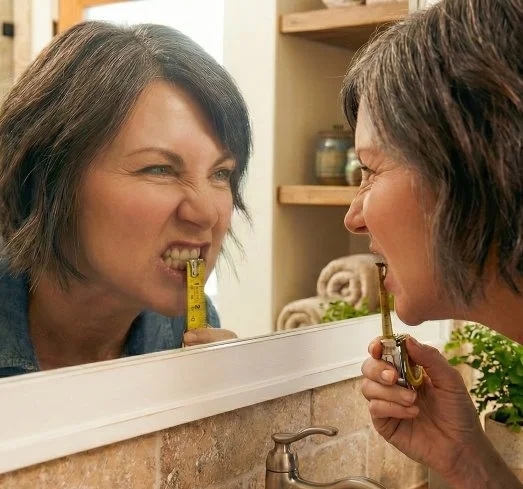
We’ve all heard the phrase "getting long in the tooth" to describe growing older. The idiom comes from horses; as a horse ages, its gums slowly recede, exposing more of the teeth and making them appear longer.
People aren’t horses; our adult teeth don’t grow longer with age. However, that doesn’t mean you’re imagining things if you look in the mirror and notice that your teeth seem longer. The foundation holding them in place that includes your gum tissue and underlying jawbone could be shrinking.
At Kelner Periodontics, patients often ask us if this visual change is just a natural, unavoidable part of aging. The short answer is no. A "lengthening" tooth is an optical illusion caused by gum recession, and it is almost always a late-stage warning sign of an underlying issue that was ignored years prior.
Read on to learn what is happening to your smile, early warning signs you may have missed, and what you can do to fix it.
Early Signs You Shouldn't Ignore
Your mouth is incredibly resilient, but it is also excellent at hiding damage. Gum recession doesn’t happen overnight. Before your teeth start to look "longer," your mouth typically sends out a series of early, often painless alarms. Because these early signs don't usually cause discomfort, they are incredibly easy to dismiss.
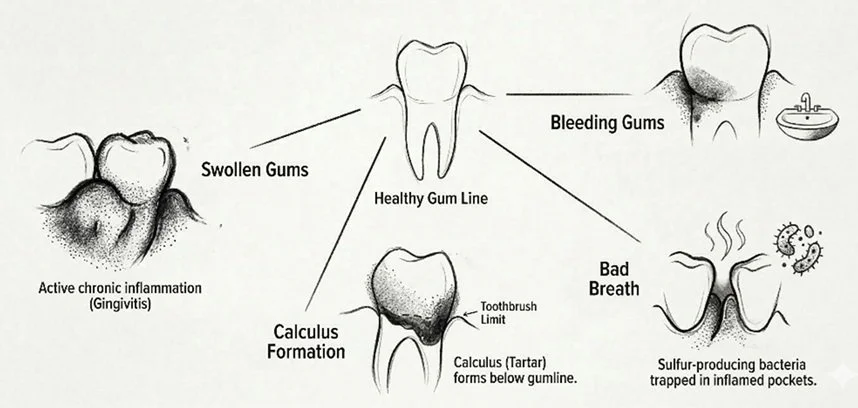
Pink in the Sink (Bleeding Gums): It is a common myth that bleeding when you brush or floss is just a sign you are brushing too hard. Healthy tissue does not bleed easily. Early stage of inflammation (gingivitis) occurs as your immune system sends extra blood vessels into your gum tissue to fight off plaque bacteria.
Persistent Bad Breath (Halitosis): As we discussed in a previous post, you often can't smell your own breath. However, if you have a persistent bad taste or odor, it is likely caused by sulfur-producing bacteria trapped in inflamed gum pockets.
The Plaque-to-Cement Pipeline: You can easily brush away soft, fuzzy plaque. But if plaque is left on the teeth, the minerals in your saliva calcify it into a hardened substance called calculus (tartar) in just a matter of days. Once calculus forms below the gumline, your toothbrush is useless against it.
Red, Swollen, or Tender Gums: Healthy gums are firm and pale pink. If your gums are puffy or dark red, they are in an active state of chronic inflammation. Blood vessels in your gums dilate to rush white blood cells, antibodies, and nutrients to the front lines. This sudden influx of blood and fluid causes the gums to become inflamed—they swell, turn red, and puff up. To the naked eye, it absolutely looks like the gum tissue is expanding or "growing toward" the tooth to fight off the infection. Medically, this stage is called gingivitis.
Later-Stage Warnings for Immediate Attention
When gum disease is left untreated, your immune system realizes it cannot win the battle against hardened calculus. Early-stage inflammation attempts to head off harmful bacteria, but if this fails the body may destroy its own bone and tissue to "retreat" away from the infection. This is when the root becomes exposed, leading to:
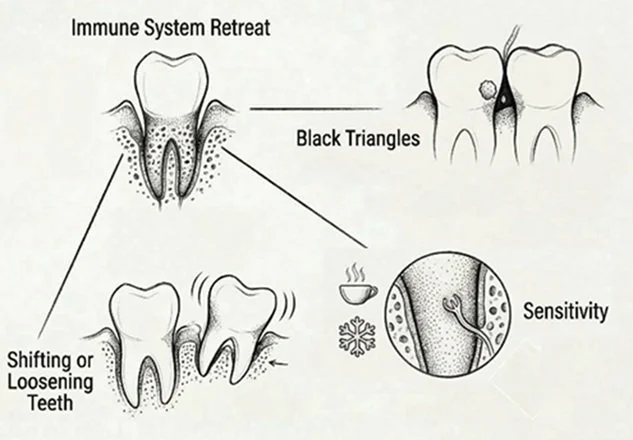
Sensitivity: The root is covered by porous cementum rather than hard enamel, leaving the nerve vulnerable to temperature changes. Black Triangles (Dark Spaces): As gum tissue recedes, gaps form between teeth where food gets stuck, further promoting bacterial growth.
Shifting or Loosening Teeth: If your gums have receded significantly, areas of the underlying jawbone may be dissolving as well. Without a solid bone foundation, teeth will begin to shift or they may even become loose.
It's Not Always Bacteria: Other Causes of Recession While periodontal disease is the leading cause of gum recession, mechanical stress can also force the gums to retreat. Aggressive Brushing: Scrubbing your teeth with a hard-bristled brush or applying too much pressure physically wears away the delicate, millimeter-thin gum tissue.
Teeth Grinding (Bruxism): Clenching or grinding your teeth at night puts immense flexing force on the base of the teeth, which can cause the gums to pull back and the enamel to chip away near the gumline.
When Grinding Masks Recession
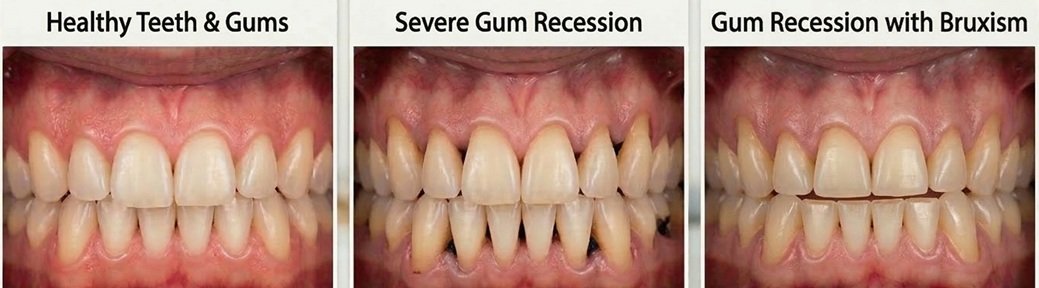
While teeth grinding (bruxism) can cause your gums to recede, it also creates a dangerous optical illusion that hides the damage. If you chronically grind your teeth, you are physically wearing away the biting surface of the enamel, making the top of the tooth shorter. If your gums are receding at the same time, exposing the bottom of the tooth, these two forces cancel each other out visually.
Because the top is wearing down while the bottom is exposed, the overall length of your tooth might appear completely normal. You won't look "long in the tooth," which means you might not realize your gums and jawbone are deteriorating until the tooth becomes mobile, cracks, or requires extraction. This is why you cannot rely solely on the mirror to gauge your periodontal health; professional evaluations are required to see the bone loss happening beneath the surface.
Can You Fix a "Long" Tooth?
There is a pervasive myth that if you just start flossing more or using a special mouthwash, your recessed gums will grow back. However, gum tissue does not regenerate on its own. Once it is gone, it’s gone.
Fortunately, a periodontist can intervene to halt the damage and repair the foundation of your smile. Depending on the severity of your condition, treatment may involve: Scaling and Root Planing (Deep Cleaning): The first step in combating active inflammation is removing the hardened calculus (tartar) and bacteria trapped deep beneath the gumline. This process also smooths the porous root surfaces, making it harder for bacteria to stick and allowing your gum tissue to heal and reattach.
Soft Tissue Grafting: Because gum tissue cannot regenerate on its own, we can use healthy tissue to cover the exposed roots. This eliminates sensitivity, restores the natural look of your smile, and reinforces the gumline to prevent future recession.
Bone Grafting and Regeneration: If the infection has caused your immune system to retreat and the underlying jawbone to dissolve, we can rebuild a solid foundation and stabilize any shifting or loosening teeth.
Custom Night Guards and Bite Adjustments: A custom-fitted guard prevents further enamel wear and stops the mechanical stress that forces gums to pull back.
Protect Your Smile's Foundation
Your teeth shouldn't look longer as you age. If you are experiencing early signs like bleeding gums, or if you have already noticed your gumline receding, the worst thing you can do is wait for it to hurt.
Delaying care allows silent inflammation to create irreversible damage. The tools we use today are highly effective, but they work best when the disease is caught as early as possible. Take the first step toward a healthier, more confident smile. Schedule an appointment with Kelner Periodontics today by calling us at (732) 587-6740. Our expert team in Clark, NJ, is ready to provide a proper assessment of your periodontal health and help you keep your natural teeth for a lifetime.